Skip to content

AI-generated content: Responses are generated by AI, automatically assembled and may contain errors. Conformi is a research tool and does not replace legal advice or case-by-case legal review. All responses should be verified using the linked original sources.

Conformi/Knowledge Base/Environment/CBAM
🌍Environment

Carbon Border Adjustment Mechanism (CBAM) — Regulation (EU) 2023/956

Analysis from 17 April 20262 sourcesConsolidated version of 20.10.2025 (incorporating Regulation (EU) 2025/2083)EUR-Lex Original

Do our imports of steel, aluminium or cement from outside the EU now carry a carbon price — and what happens if we ignore the new border mechanism?

From 1 January 2026, every importer of CBAM goods (cement, iron/steel, aluminium, fertilisers, electricity, hydrogen) must hold authorised CBAM declarant status, buy CBAM certificates matching the EU ETS price, and surrender them by 30 September each year — failure to surrender triggers the EU ETS excess-emissions penalty per missing certificate, and unauthorised importers face three to five times that amount [Art. 26].

Short Answer

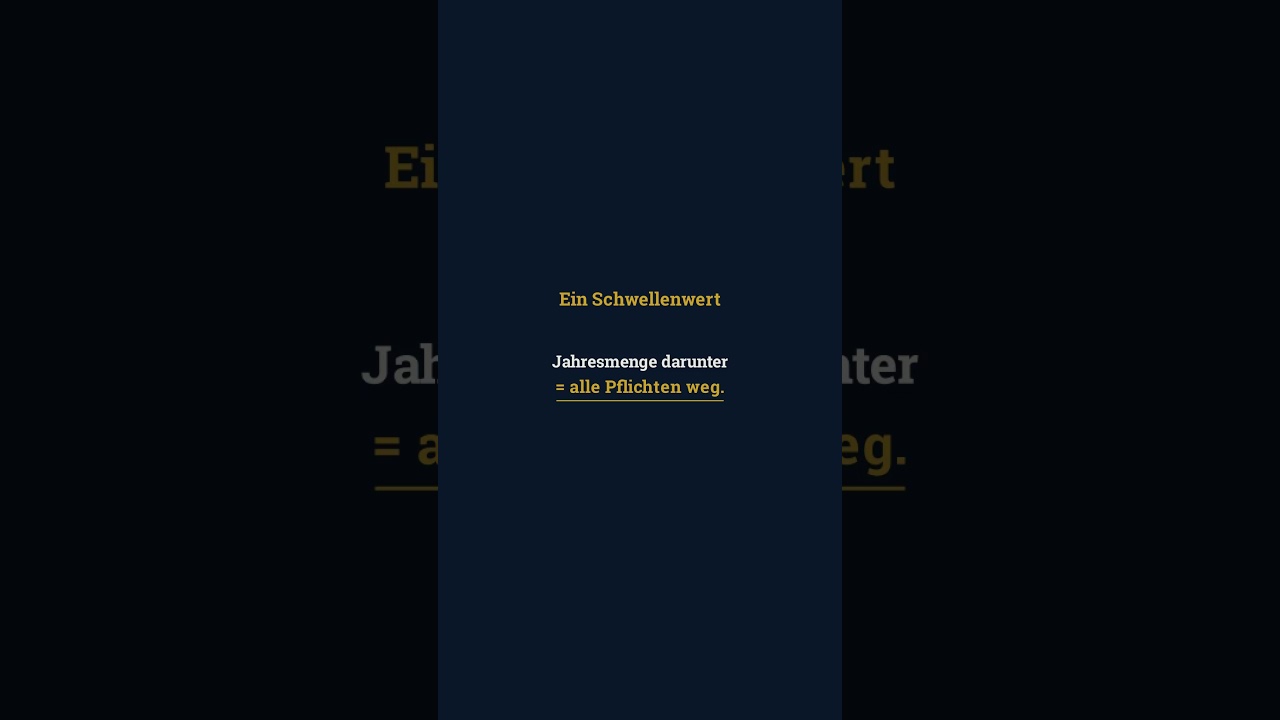
The CBAM Regulation requires importers of carbon-intensive goods to purchase certificates reflecting the EU ETS carbon price for the embedded emissions of those goods [Art. 1, Art. 22]. Any carbon price already paid in the country of origin can be deducted [Art. 9]. The transitional reporting-only phase ran from 1 October 2023 to 31 December 2025; from 1 January 2026, importers must obtain authorised CBAM declarant status and begin purchasing and surrendering CBAM certificates [Art. 36(2)]. A de minimis exemption (single mass-based threshold) was introduced by amending Regulation (EU) 2025/2083 — importers below that threshold are exempt from CBAM obligations, except for electricity and hydrogen [Art. 2a].

Who is affected

Any person importing goods listed in Annex I (cement, electricity, fertilisers, iron and steel, aluminium, hydrogen) into the EU customs territory from third countries. This covers direct importers established in a Member State and indirect customs representatives acting on behalf of non-EU importers [Art. 2, Art. 5]. Importers below the single mass-based threshold set out in Annex VII are exempt, except for electricity and hydrogen imports [Art. 2a].

Deadline

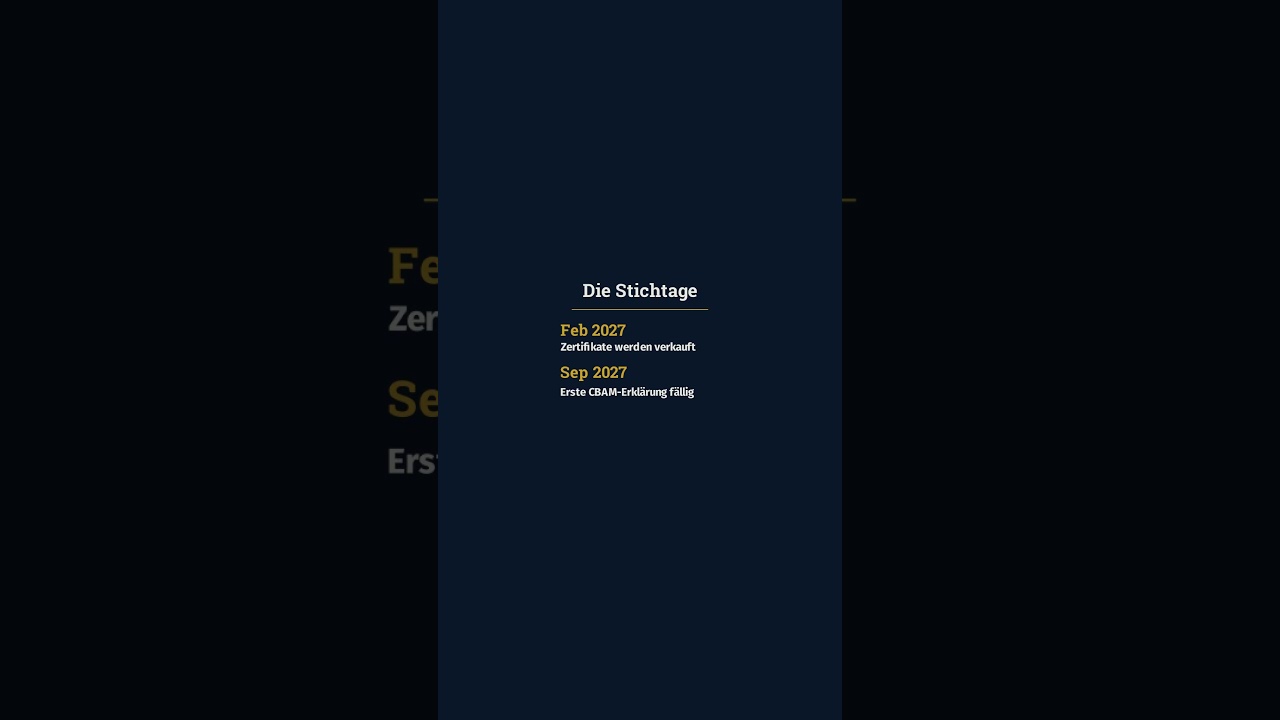
30 September 2027 — first CBAM declaration and certificate surrender deadline, covering imports made in calendar year 2026 [Art. 6(1), Art. 22(1)]. From 2027 onwards, importers must also ensure at least 50 % of estimated certificates are on their CBAM account at the end of each quarter [Art. 22(2)].

Risk

Penalty for each unsurrendered CBAM certificate equals the EU ETS excess-emissions penalty (EUR 100 per tonne of CO2e, indexed annually) [Art. 26(1), referencing Art. 16(3) Directive 2003/87/EC]. Unauthorised importers face three to five times that amount per certificate [Art. 26(2)]. Payment of the penalty does not relieve the obligation to surrender the outstanding certificates [Art. 26(3)]. Additionally, the competent authority may revoke authorised CBAM declarant status for serious or repeated infringements [Art. 17(8)].

Proof

Legal status

  • In force
  • as of 2026-04-17
  • Consolidated version of 20.10.2025 (incorporating Regulation (EU) 2025/2083)

Primary sources

What to do now

Legal / DPO

  • Assess whether the de minimis exemption under the single mass-based threshold (Annex VII) applies to each importing entity; document the analysis, as exceeding the threshold retroactively triggers full CBAM obligations for the entire calendar year [Art. 2a(2)].
  • Review all third-country supplier contracts to include clauses requiring disclosure of installation-level embedded-emissions data and carbon prices paid, as this information is mandatory for the CBAM declaration and verification [Art. 7, Art. 9].
  • Establish a record-retention policy for CBAM documentation — records must be kept until the end of the fourth year after the CBAM declaration was or should have been submitted [Art. 7(6), Art. 9(3)].

Compliance

  • Apply for authorised CBAM declarant status via the CBAM registry before importing any CBAM goods; ensure all prerequisites under Art. 5(5) are met, including EORI number, no outstanding tax recovery orders, and financial capacity documentation [Art. 5, Art. 17].
  • Implement a quarterly monitoring process to ensure at least 50 % of estimated CBAM certificates are on the account by the end of each quarter from 2027 onwards [Art. 22(2)].
  • Submit the annual CBAM declaration by 30 September each year, covering all goods imported in the preceding calendar year, including embedded emissions verified by an accredited verifier where actual emissions are used [Art. 6, Art. 8].

IT / Security

  • Integrate the CBAM registry (EU Commission electronic database) into the organisation's trade compliance IT landscape, including secure credential management for authorised declarant access [Art. 14].
  • Build automated data pipelines to collect installation-level emissions data, CN codes, quantities and country-of-origin information from ERP/customs systems for the quarterly 50 %-coverage check and annual CBAM declaration [Art. 6(2), Art. 22(2)].
  • Ensure that records of embedded-emissions calculations, verification reports and carbon-price documentation are stored in an audit-proof, tamper-evident system for the mandatory four-year retention period [Art. 7(5), Art. 7(6)].

Product / Engineering

  • Map every imported product and precursor to the correct CN code in Annex I and determine whether direct emissions only (Annex II goods) or direct and indirect emissions apply [Art. 7(1)].
  • Engage third-country operators to register in the CBAM registry and provide verified installation-level emissions data — this is the only way to use actual emissions instead of default values with mark-up [Art. 10, Art. 7(2)].
  • Evaluate sourcing alternatives: where suppliers cannot provide actual emissions data, CBAM costs will be calculated using Commission default values, which may significantly exceed actual emissions and erode product margins [Art. 7(2)(b), Annex IV point 4.1].

Key Terms

CBAM certificate
An electronic certificate corresponding to one tonne of CO2 equivalent of embedded emissions in imported goods, purchased at a price linked to the EU ETS allowance price [Art. 3(24)].
Authorised CBAM declarant
A person authorised by a national competent authority to import CBAM goods into the EU customs territory and to submit CBAM declarations [Art. 3(17), Art. 17].
Embedded emissions
Direct emissions released during the production of goods and indirect emissions from electricity consumed in those production processes, calculated pursuant to Annex IV [Art. 3(22)].
Carbon leakage
The risk that production — and its associated greenhouse gas emissions — relocates from the EU to third countries with less ambitious climate policies, undermining overall emission reductions.
EU ETS (EU Emissions Trading System)
The EU system for trading greenhouse gas emission allowances among installations in the EU, to which CBAM certificate pricing is aligned [Art. 3(5), Art. 21].
Default values
Values calculated or drawn from secondary data representing the embedded emissions in goods, applied when actual installation-level data is not available [Art. 3(27), Annex IV point 4.1].
CBAM registry
A standardised EU electronic database managed by the Commission containing data on authorised CBAM declarants, their certificates, third-country operators and accredited verifiers [Art. 14].
?

Frequently Asked Questions

Which goods are covered by CBAM?
CBAM applies to imports of goods listed in Annex I: cement, electricity, fertilisers, iron and steel, aluminium, and hydrogen. The goods are identified by their Combined Nomenclature (CN) codes [Art. 2(1), Annex I].
What is the transitional period and what obligations applied during it?
The transitional period ran from 1 October 2023 to 31 December 2025. During this period, importers had reporting-only obligations — quarterly CBAM reports on embedded emissions — with no requirement to purchase or surrender certificates [Art. 32, Art. 35].
How is the price of a CBAM certificate determined?
The price is calculated as the weekly average of closing prices of EU ETS allowances on the auction platform. For emissions declared in respect of 2026, a quarterly average applies instead [Art. 21(1), Art. 21(1a)].
Can the carbon price paid in the country of origin be deducted?
Yes. An authorised CBAM declarant may claim a reduction in certificates to surrender to account for a carbon price effectively paid in the country of origin, provided documentation is certified by an independent person. From 2027, the Commission may also publish yearly default carbon prices for third countries with carbon pricing rules [Art. 9].
What is the de minimis exemption introduced by Regulation (EU) 2025/2083?
Importers whose cumulative net mass of CBAM goods in a calendar year stays below the single mass-based threshold in Annex VII are exempt from CBAM obligations. However, if the threshold is exceeded during the year, full obligations apply retroactively to all imports of that year. The exemption does not apply to electricity or hydrogen [Art. 2a].
What happens if an importer does not have authorised CBAM declarant status?
From 1 January 2026, customs authorities shall not allow importation of CBAM goods by any person other than an authorised CBAM declarant (with limited exceptions for the de minimis threshold). An unauthorised importer faces a penalty of three to five times the EU ETS excess-emissions penalty per unsurrendered certificate [Art. 25(1), Art. 26(2)].
How are embedded emissions calculated?
Embedded emissions cover direct emissions from the production process and, for most goods, indirect emissions from electricity consumed during production. They can be determined based on actual emissions (verified by an accredited verifier) or by reference to Commission default values. For goods listed in Annex II, only direct emissions are counted [Art. 7, Annex IV].
3

Assessment Factors & Checklist

Premium
4

Questions for Your Lawyer

Premium
5

Conclusion & Summary

Premium

Detailed analysis with source links.

Schalten Sie die KI-Analyse frei — mit markierten Fundstellen und direkten Links zu EUR-Lex. 7 Tage kostenlos testen.

Keine Kreditkarte heute. Kündigung jederzeit.