Key Terms
- Digital operational resilience
- The ability of a financial entity to build, assure and review its operational integrity and reliability by ensuring, directly or indirectly through the use of ICT third-party service providers, the full range of ICT-related capabilities needed to address the security of network and information systems [Art. 3(1)].
- ICT risk
- Any reasonably identifiable circumstance in relation to the use of network and information systems which, if materialised, may compromise the security of the network and information systems, of any technology-dependent tool or process, of operations and processes, or of the provision of services, thereby adversely affecting the integrity or availability of data, software or any other component of ICT services and infrastructures, or causing a breach of confidentiality or damage to physical ICT infrastructure [Art. 3(5)].
- ICT-related incident
- A single event or a series of linked events unplanned by the financial entity that compromises the security of the network and information systems, and has an adverse impact on the availability, authenticity, integrity or confidentiality of data, or on the services provided by the financial entity [Art. 3(8)].
- Critical ICT third-party service provider
- An ICT third-party service provider designated as critical by the ESAs through the Joint Committee, based on criteria including the systemic impact a failure or operational disruption of the provider could have on financial entities it serves [Art. 31].
- Threat-led penetration testing (TLPT)
- A framework for mimicking the tactics, techniques and procedures of real-life threat actors, designed to provide a controlled, bespoke, intelligence-led test of the financial entity's critical live production systems, based on the TIBER-EU framework [Art. 3(17), Art. 26].
- ICT third-party risk
- An ICT risk that may arise for a financial entity in relation to its use of ICT services provided by ICT third-party service providers or by subcontractors of the latter, including through outsourcing arrangements [Art. 3(18)].
- Lead Overseer
- The European Supervisory Authority (EBA, ESMA or EIOPA) appointed to conduct the oversight of a critical ICT third-party service provider, with powers to request information, conduct investigations and on-site inspections, and impose periodic penalty payments [Art. 31(1)(b), Art. 35].
- Critical or important function
- A function the disruption of which would materially impair the financial performance of a financial entity, or the soundness or continuity of its services and activities, or whose discontinued, defective or failed performance would materially impair the continuing compliance of a financial entity with its authorisation conditions and obligations [Art. 3(22)].
?
Frequently Asked Questions
Which entities does DORA apply to?
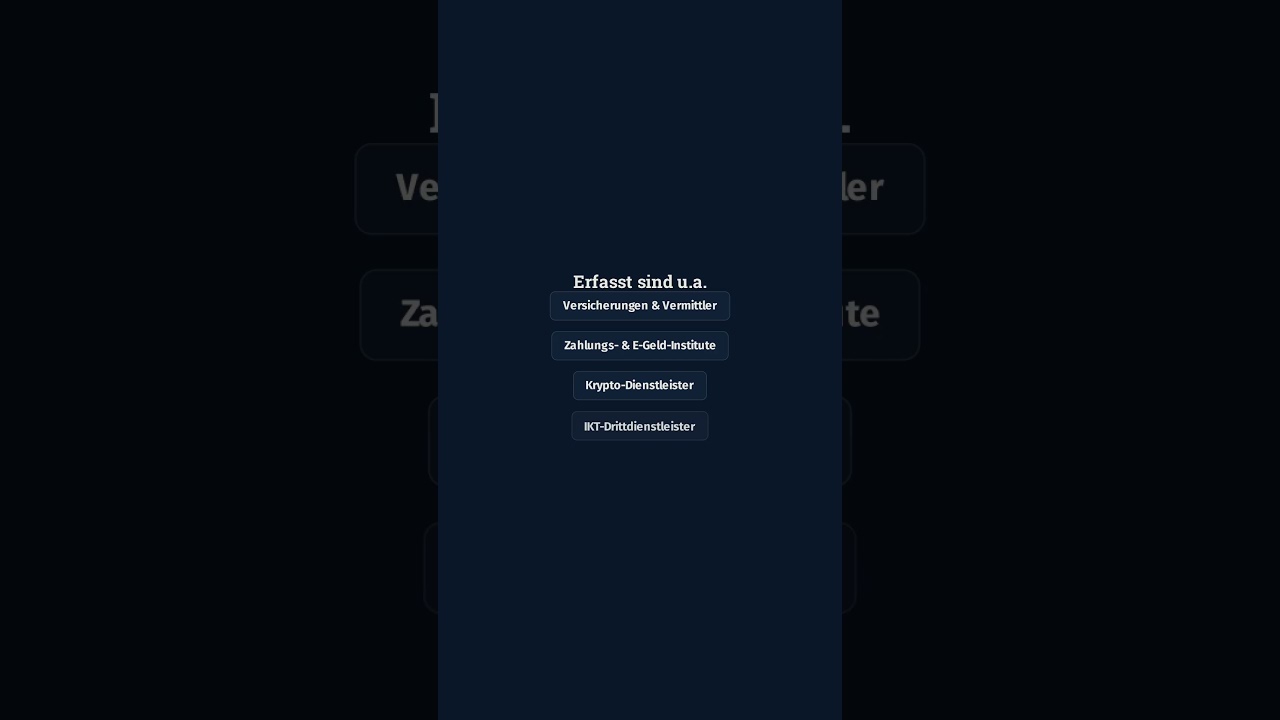
DORA applies to 20 types of financial entities including credit institutions, payment institutions, investment firms, insurance and reinsurance undertakings, central counterparties, trading venues, central securities depositories, crypto-asset service providers, credit rating agencies, managers of alternative investment funds, management companies and crowdfunding service providers [Art. 2(1)]. It also establishes an oversight framework for critical ICT third-party service providers [Art. 31].
How does DORA relate to NIS2?
DORA constitutes lex specialis with regard to the NIS2 Directive (Directive (EU) 2022/2555) for financial entities [Art. 1(2), Recital 16]. Financial entities in scope of DORA follow the DORA requirements rather than NIS2 for ICT risk management and incident reporting, but the two frameworks are designed to be complementary and competent authorities cooperate with NIS2 CSIRTs [Recital 18].
What must be reported as a major ICT-related incident?
An ICT-related incident is classified as major based on six criteria: number of affected clients or counterparts, duration and service downtime, geographical spread, data losses (availability, authenticity, integrity or confidentiality), criticality of affected services, and economic impact [Art. 18(1)]. The ESAs have specified materiality thresholds via regulatory technical standards [Art. 18(3)].
What is the incident reporting timeline under DORA?
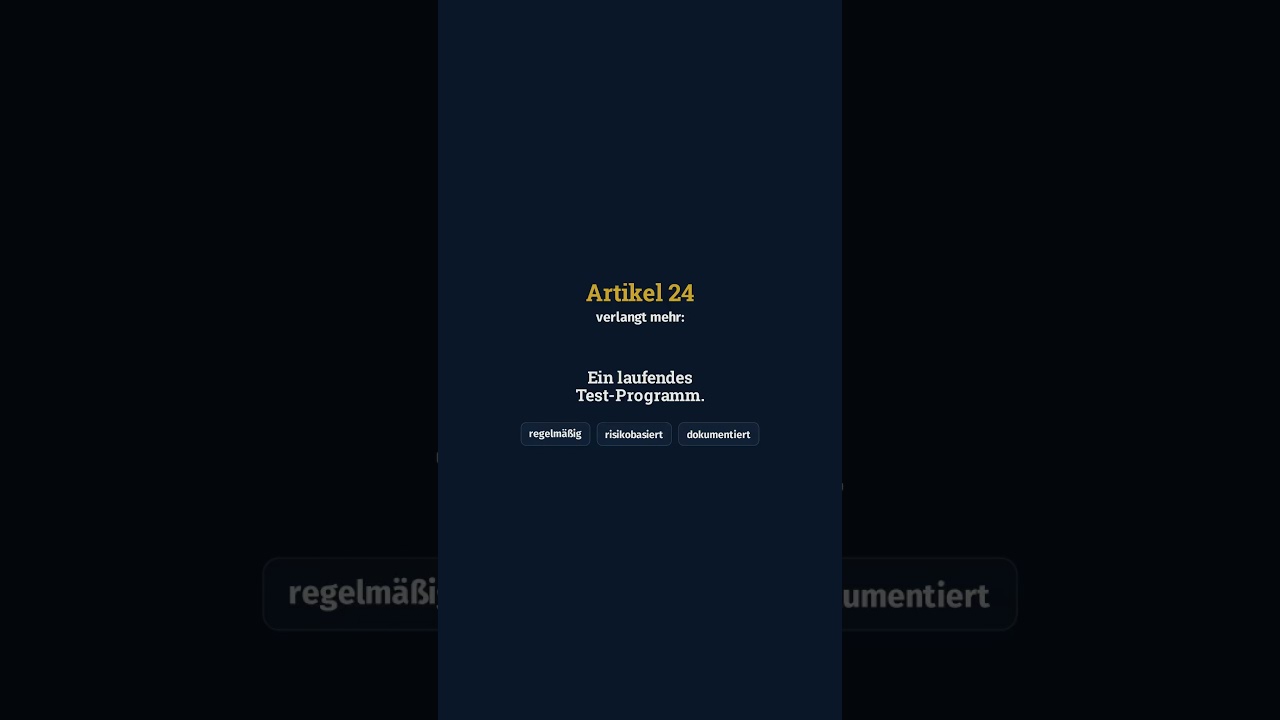
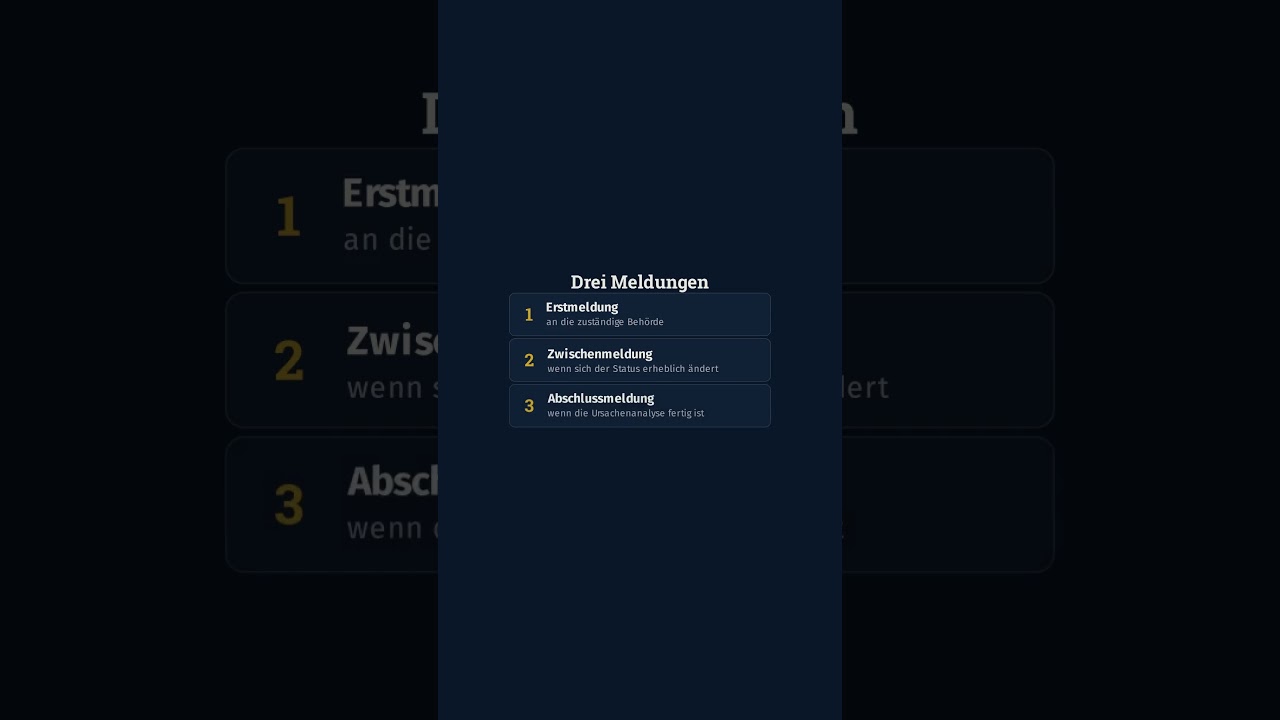
Financial entities must submit an initial notification, an intermediate report when the status of the incident changes significantly or handling evolves based on new information, and a final report once root-cause analysis is completed — regardless of whether mitigation is complete [Art. 19(4)]. Exact time limits are set by the ESA regulatory technical standards [Art. 20].
What is threat-led penetration testing (TLPT) and who must perform it?
TLPT is advanced testing that simulates the tactics, techniques and procedures of real threat actors against an entity's critical live production systems. Only financial entities identified by competent authorities — typically large, systemic and ICT-mature entities — must perform TLPT at least every three years [Art. 26(1)]. Testers must be qualified and independent, and threat intelligence providers must always be external [Art. 27, Recital 61].
What contractual requirements does DORA impose on ICT outsourcing?
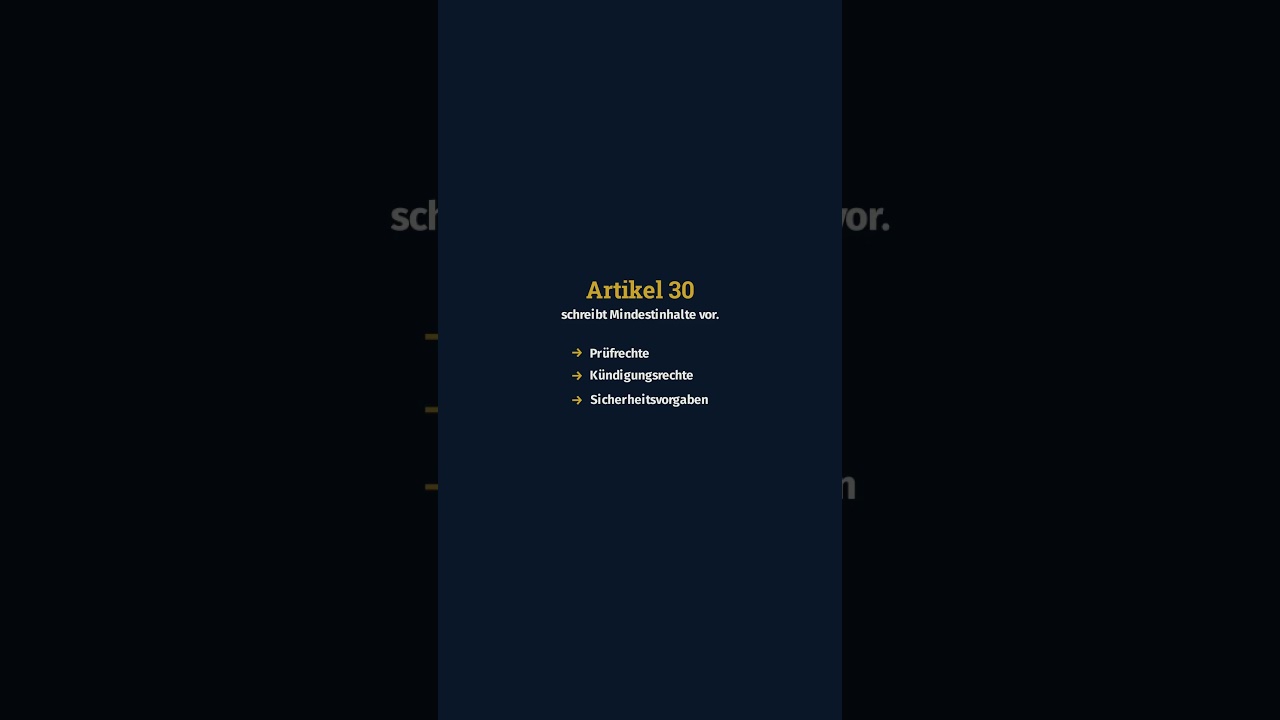
Contracts with ICT third-party service providers must include: full service level descriptions, data processing and storage locations, provisions on availability and integrity, access and audit rights for the financial entity and its supervisors, termination rights and adequate transition periods, and the provider's obligation to cooperate during incidents [Art. 30]. For critical or important functions, additional requirements apply including exit strategies and data portability guarantees [Art. 28(8)].
Are microenterprises subject to all DORA requirements?
No. Microenterprises benefit from a simplified ICT risk management framework [Art. 16] and are exempt from several requirements including: establishing a three-lines-of-defence model, submitting the ICT risk management framework to internal audit, conducting TLPT, and performing advanced ICT concentration risk assessments [Recital 43]. However, they must still comply with incident reporting and basic ICT risk management obligations.
3
Assessment Factors & Checklist
Premium4
Questions for Your Lawyer
Premium5
Conclusion & Summary
PremiumDetailed analysis with source links.
Schalten Sie die KI-Analyse frei — mit markierten Fundstellen und direkten Links zu EUR-Lex. Kostenlos prüfen mit Scout.
Keine Kreditkarte. 50 Recherchen + 5 KI-Analysen frei.
In short — videos on this topic
60-second explainers from our YouTube channel. Click opens YouTube in a new tab — no YouTube embed, no tracking on this page.